Best Practices
Two institutional practices that shape how VISTAS teaches, works with industry and develops its students.
OVERVIEW
Practices That Set the VISTAS Standard
Under NAAC Criterion 7.2.1, VISTAS documents the practices that best reflect its mission. Each one records why it was started, how it works across the university, the evidence of its success, and the problems faced along the way.
- Best Practice I – Bridging the Gap: VISTAS' Industry Engagement Initiative
- Best Practice II – VISTAS' Vision for Students' Holistic Development
BEST PRACTICE I
Bridging the Gap: VISTAS' Industry Engagement Initiative
There is a substantial gap in India between the competencies graduates have and what industry needs. Industry often feels that universities do not prepare students for rapid technological change, while universities find industry reluctant to use their research or invest in joint work.
VISTAS treats industry engagement as a full partnership that runs from admission to graduation and beyond. It shapes curricula, research, faculty development, entrepreneurship, internships and placements.
THE PRACTICE
How VISTAS Works with Industry
Five strands of the Institute–Industry engagement.
-
Industry-relevant education
Every course is designed with industry and academic experts, so students learn skills that apply directly in the workplace. Some UG programmes are run in collaboration with industry.
-
Industry-led research
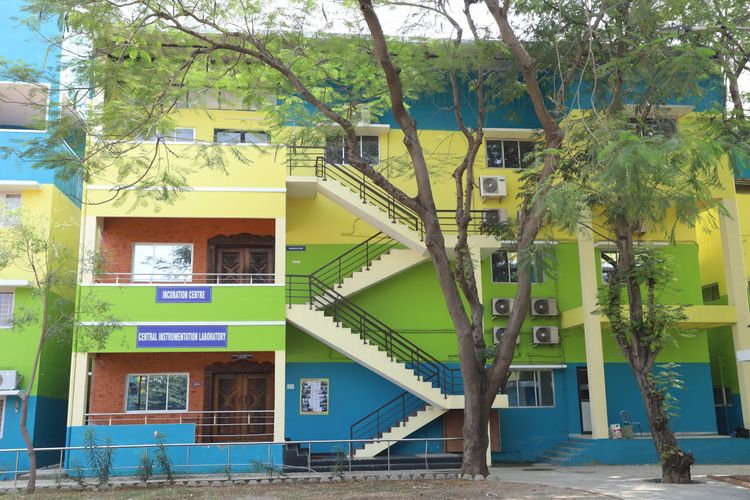
Departments work with industry partners on current research challenges. VISTAS invested about ₹11 crore in a Central Instrumentation Lab with FESEM, XRD, HPTLC, BET surface area, particle size and zeta potential, and Raman instruments.
-
Professional development
Faculty engage with industry professionals through seminars, workshops and joint projects to stay current with industry trends.
-
Entrepreneurship and innovation
Students, faculty and alumni get support for start-ups through the incubators, industry mentors, networks, funding and a product promotion centre.
-
Industry-linked programmes and internships
Internships and skilling at industry are mandatory for Medicine, Nursing, Health Sciences, Engineering, Management, and Life and Basic Sciences students.
EVIDENCE OF SUCCESS
Industry Engagement in Numbers
Outcomes recorded over the last five years.
225
Active industry MoUs
For training, internships, research, visits and certificate courses
11,805
Students placed
Through VISTAS' industry engagement initiatives
323
Consultancy projects
Advisory and R&D consultancy, including clinical trials
204
Industry experts
Registered for a Ph.D. at VISTAS
75+
Industry experts on BoS
Across the Boards of Studies of 46 departments
22
Start-ups incubated
With 15 products developed at the incubation centres
PRACTICE DETAILS
Best Practice I in Detail
Objectives, outcomes, challenges and resources, as documented for NAAC.
- Exchange knowledge, experience and resources between VISTAS and industry to promote innovation and problem solving.
- Align academic courses with industry demands and standards so students gain practical, workplace-ready skills.
- Offer industry experience, internships and collaborative projects that improve students' practical skills and employability.
- Foster collaborative research between VISTAS and industry on real-world problems.
- Transfer research findings and intellectual property to industry partners for development, commercialisation and societal impact.
- Research, collaborative and consultancy projects
- Industrial training (in-plant and community pharmacy training) and industrial visits
- Hands-on training and student internships
- Guest lectures, conferences, symposia, seminars and FDPs
- Certificate courses, awareness programmes, yoga classes and biomedical waste disposal
- 31 programmes conducted with 11 industry partners, plus value-added courses taught by industry experts.
- 10 collaborative research projects with industry, for example a study with Areete Life Sciences on the strength and durability of concrete using artificial aggregates.
- 276 guest and special lectures organised by the schools.
- Industry representation on the Board of Management, Academic Council and IQAC.
- Start-up partnerships with EDII, CED, NSIC, EDII-TN and the MSME Department, Government of India.
- Products from the incubation centres include an IoT fire-fighting robot, a smart cradle, a tablet vending machine, an ablution water saver and a step-climbing robot.
- Building ongoing engagement and confidence with industry on a large and varied scale.
- Differences in language, terminology and communication styles, overcome through consistent effort on both sides.
- Different priorities and timelines: academic work focuses on scholarship, industry on practical outputs and quick answers.
- Limited finance and time, and industry reluctance to fund research with uncertain outcomes.
- Finding time for faculty to take part alongside teaching, research and administration.
- Resources to analyse the effectiveness, impact and outcomes of collaborative initiatives.
- Performance measures, evaluation criteria and monitoring procedures to quantify the success of each engagement.
BEST PRACTICE II
VISTAS' Vision for Students' Holistic Development
Holistic development looks beyond academic achievement to a student's physical, emotional, social, intellectual and moral growth. It prepares students to handle challenging situations and succeed in every part of their careers.
VISTAS provides a 360-degree education built on four areas of growth: intellectual, social, physical and emotional.
THE PRACTICE
Four Areas of Growth
How VISTAS develops every student intellectually, socially, physically and emotionally.
-
Intellectual development
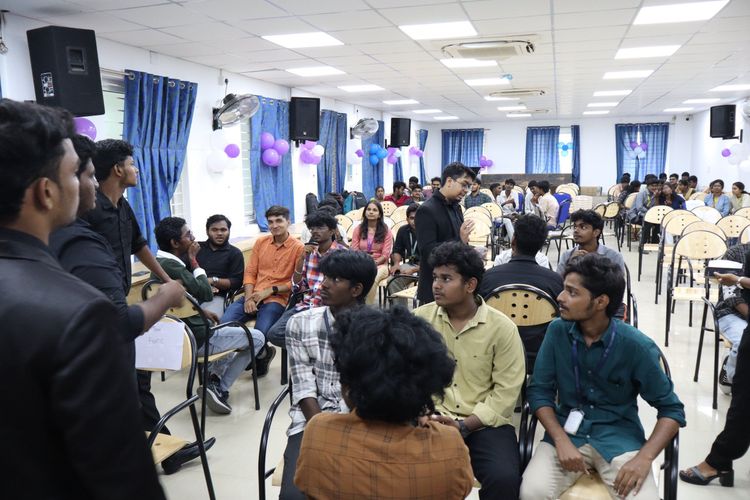
Value-added courses, soft-skill and placement training, invited talks by academic and industry experts, the AVISHKAR intra-university technical and science expo, the VELS Research Fellowship, and VELS Success Day for top achievers.
-
Social development
Swachhata Pakhwada cleanliness drives, Unnat Bharat Abhiyan through the NSS units, adoption of villages, and family adoption by Vels Medical College students, who track each family's health through a Health Card.
-
Physical development
Yoga in the curriculum and on campus, fitness and sports facilities, and health and wellness programmes for students and staff.
-
Emotional development
A mentor–mentee system that pairs every student with a faculty mentor, confidential counselling services, and alumni sharing their career journeys.
EVIDENCE OF SUCCESS
Holistic Development in Numbers
Outcomes recorded over the last five academic years.
Value-added learners
Across 484 value-added courses
Students placed
By 603 companies
Faculty mentors
11.46 lakh mentor–mentee meetings for 62,393 students
Social service activities
In the neighbourhood community
Families adopted
By 400 medical students
Sports awards
International, national, state and regional
PRACTICE DETAILS
Best Practice II in Detail
Objectives, outcomes, challenges and resources, as documented for NAAC.
To fulfil the vision of VISTAS by instilling holistic development in its students: fostering their intellectual, social, physical and emotional capacities and preparing them to tackle challenging situations effectively.
- Each student takes 2 to 3 value-added courses alongside their degree.
- 17 soft-skill, technical and aptitude training programmes conducted.
- 14,925 students benefited from about 276 invited expert talks.
- AVISHKAR receives more than 300 entries a year; 50–55 of the best ideas are shown to the jury and more than 50 student ideas have been published as patents.
- The VELS Research Fellowship supports 64 full-time scholars with ₹20,000 a month and a ₹10,000 annual contingency grant.
- Around 500 students a year receive scholarships, including VSAT, Vels Alumni, Merit, First Graduate, Ex-Serviceman and Sports scholarships.
- 505 social service activities in the last five academic years.
- 18 Unnat Bharat Abhiyan programmes organised by 3,485 NSS volunteers.
- Five villages adopted in Chengalpattu and Kancheepuram districts: Kovilambakkam, Nanmangalam, Vengaivasal, Polichalur and Thiruneermalai panchayats.
- 1,200 families in Manjakaranai Taluk adopted by 400 medical students.
- International Yoga Day celebrated every year, plus 15 yoga programmes benefiting 593 people.
- 7 international, 27 national, 20 state and 18 regional sports awards in five years.
- Varun Thakkar, a VELS University student, represented India in sailing (49er class) at the Tokyo 2020 Olympics.
- 11.46 lakh mentor–mentee meetings by 3,542 mentors for 62,393 students in five years.
- A female counsellor appointed to support and empower women students and faculty.
- Alumni sessions on career paths, resilience, perseverance and goal setting.
- Participation: sedentary lifestyles and screen time make some students reluctant to take part.
- Parental support: some parents of women students were hesitant about outreach programmes; regular interaction with parents has improved this.
- Balancing schedules, especially for science and computer science students with intensive timetables.
- Communication barriers in career guidance for students educated in regional languages.
- More sensitisation lectures for students on social extension activities and their impact.
- Sensitisation of faculty and support staff by Heads of Departments and senior faculty.
- Motivation initiatives: wellness programmes, leadership programmes, inclusive events and community projects with NGOs and government agencies.